
Breaking News

LI News Radio 103.9 * Click the link below to listen Live online * Listen on your Amazon Echo device - Ask Alexa to play One Oh Three Nine L I News Radio

World News

Gunman in deadly Mexican tourist site shooting was influenced by violent acts in US: Officials

An aerial view of the Pyramid of the Moon following a shooting that left at least one person dead, at the Teotihuacan archaeological site, in Teotihuacan, Mexico on April 20, 2026. (Daniel Cardenas/Anadolu via Getty Images)

(NEW YORK) -- The man who opened fire at one of Mexico's busiest tourist sites was allegedly influenced by violent acts in the United States, Mexican officials said Tuesday.

The deadly mass shooting occurred during the late morning Monday at the Teotihuacan pyramids, an archaeological site outside of Mexico City. The shooter fired upon tourists from atop one of the pyramids while armed with a revolver that he reloaded at least twice before dying by suicide, according to José Luis Cervantes Martínez, the attorney general of the state of Mexico.

One person was killed and seven others wounded by gunfire, officials said. Several people also suffered injuries in the ensuing panic.

"We all know that we had not seen anything like this in Mexico before," Mexican President Claudia Sheinbaum told reporters at a press briefing on Tuesday. "Based on information from the authorities, the individual showed signs of psychological issues and was influenced by incidents that occurred abroad."

The gunman held a plastic bag containing 52 rounds of ammunition during the attack, according to Cervantes Martínez. The shooter also had a bladed weapon on him and handwritten materials reportedly related to violent incidents believed to have occurred in the U.S. in April 1999, the attorney general said.

The shooting occurred on the same day as the 1999 Columbine High School massacre.

"Evidence collected so far suggests a psychopathic profile of the attacker, characterized by a tendency to imitate violent acts that occurred in other places and at other times," Cervantes Martínez said at Tuesday's press briefing. "This phenomenon, known as a 'copycat' effect, is one of the lines of investigation in this case, as materials referencing violent acts and figures associated with such behavior were found."

The gunman, identified as Julio César Jaso Ramírez, is not linked to organized crime and appears to have acted alone in a premeditated act, officials said.

"Investigative findings indicate that the attack was not spontaneous. The attacker had previously visited the archaeological site on several occasions, stayed in nearby hotels, and from there planned and carried out his actions," Cervantes Martinez said.

The first report of an armed individual at the tourist site came at 11:20 a.m., officials said. State police and the Mexican National Guard responded and were also attacked. While returning fire, the gunman was shot in the leg by the National Guard, officials said. He shot himself while being subdued and died from a self-inflicted gunshot wound, officials said.

One person -- a Canadian woman -- was fatally shot and seven others suffered gunshot wounds during the attack, authorities said. Six others were also injured, such as from falls, in the incident, authorities said. Those injured were from Brazil, Canada, Colombia, the Netherlands, Russia and the U.S., officials said.

Sheinbaum said authorities are investigating how the attacker was able to enter the site with a weapon.

In the wake of the deadly shooting, Mexico will be increasing security at archaeological sites and other public locations across the country by increasing the presence of the Mexican National Guard and installing screening equipment, the president said.

"In light of this event, it is necessary to strengthen inspections to prevent anyone from entering an archaeological site or public space with a firearm," Sheinbaum said.

Copyright © 2026, ABC Audio. All rights reserved.


7.4 magnitude earthquake strikes off Japanese coast, USGS says

Table indicating the escape route in the case of tsunamis. (Getty stock photo)

(TOKYO) --  A 7.4 magnitude earthquake struck on Monday off Japan's northeastern coast, the U.S. Geological Survey said, prompting authorities to issue tsunami warnings and advisories along parts of the coast that were later downgraded to advisories and then cancelled.

"Based on the preliminary earthquake parameters, hazardous tsunami waves are possible for coasts located within 300 km of the earthquake epicenter," USGS said after the quake was detected.

The Japan Meteorological Agency initially said tsunami warnings were in place for some of the coast along the Pacific, along with lesser advisories and forecasts farther away from the quake's center.

"Residents in areas where tsunami warnings have been issued should immediately evacuate to higher ground or evacuation buildings and other higher, safer locations," Prime Minister Sanae Takaichi said.

The tsunami waves that were expected to have been the highest struck the coast within hours, with the largest one registering about 80 cm, or about 2.5 feet, but officials said they had not ruled out further waves. Official warnings were still in place, although the U.S. weather officials said in an update that, based on available data, "the tsunami threat from this earthquake has now passed."

Preliminary U.S. data pinpointed the quake about 100 km, or about 62 miles, off the eastern coast of Miyako, USGS said. Light rumbling could be felt as far away as Tokyo. A 5.6 magnitude earthquake struck nearby about 40 minutes afterward, according to USGS data.

The Japanese agency held a press conference on Monday, during which it identified the quake as having been a 7.5 magnitude one. The depth was 10 km, or about 6.2 miles. It occurred at 4:53 p.m. local time, the agency said.

A tsunami warning was issued under twenty seconds after the initial earthquake, an official said. Officials warned people to stay on the alert for about week, as an equal or lesser than quake may occur. The risk was especially elevated for the next two or three days, officials said.

The U.S. Tsunami Warning System said a "destructive" Pacific-wide tsunami was not expected "and there is no threat to Hawaii."

ABC News' Joe Simonetti and Victoria Beaule contributed to this report.

Copyright © 2026, ABC Audio. All rights reserved.


Iran escalates crackdown on dissent as arrests, executions and threats surge, observers say

Women seen in front of an Iranian flag during a pro-government National Army Day demonstration on April 17, 2026 in Tehran, Iran. (Majid Saeedi/Getty Images)

(LONDON) -- Even as a fragile two-week ceasefire between Iran and the U.S. holds – sparing about 90 million Iranians from the immediate threat of bombardment – many Iranians at home and abroad say they still face an intensifying wave of threats from the Islamic Republic regime as it continues cracking down on dissent.

The leaders of the Iranian regime have escalated measures to silence any kind of protests and criticisms against their policies both inside the country and across its diaspora, Iranians and observers inside the country and abroad told ABC News.

Shiva, a London-based Iranian journalist, says she has received direct threats from Iranian security forces, been labelled a “traitor” and had her assets in Iran confiscated. Shiva and other Iranians who spoke with ABC News in recent days asked not to be identified by their real names because of security concerns.

She is one of more than 400 Iranian journalists and artists abroad whose assets in Iran have been seized by the Islamic Republic for allegedly supporting what authorities describe as "hostile foreign actors," according to a judiciary statement issued on April 11.

Since the beginning of the U.S.-Israeli war on Iran, the Islamic Republic judicial authorities have repeatedly said that they would adopt extreme measures against those who “collaborate with the enemy” – a broad accusation that they usually use against protesters. 

The measures range from harsh sentences by the judiciary including death sentence and lengthy prison terms on protesters at home, to seizing local assets belonging to dissidents abroad.

Despite the threats against her, Shiva says she is most concerned about her family who live in Iran and could face harassment by authorities because of her reporting, she told ABC News on Wednesday.

Having covered the situation of human rights violations in Iran, she added that she is "extremely worried" about the situation of the imprisoned protesters in the country.

"What worries me is my family, and the people inside Iran," Shiva said, "the voices of people inside the country are not being heard – those who are at risk of execution, those who are being silenced."

A judicial authority told the state media on Tuesday that such moves are aligned with the new legislation of the country made to intensify penalties for espionage and cooperation with countries that are deemed as “hostile” to Iran including Israel and the United States.

Arrests, prison situation and executions

In the months before the war with the U.S. and Israel began in late February, the Iranian regime committed massacres to suppress a series of nationwide protests in the country while imposing an internet blackout to prevent voices of protesters and families of the victims from being heard by the world, and to disrupt their communication with one another, according to the U.S. and international observers.

According to the U.S.-based Human Rights News Agency (HRANA), over 7,000 people – including at least 6,488 protesters – were killed in the protests which had been ignited over the severe economic hardships with dramatic fall of the country’s currency in the last days of December 2025. ABC News could not independently verify those figures.

Security forces arrested more than 50,000 people across the country, HRANA reported. Two Iranian lawyers and several human rights activists told ABC News at the time that those behind the bars did not have access to basic rights including having access to a lawyer or a fair transparent trial.

Rule of fear

The situation got even worse for dissidents in Iran after the U.S. and Israel started the war on the country, Iranians told ABC News, following President Donald Trump's Feb. 28 address to Iranians, in which he said that they can "take over" their government once the U.S. and Israel are finished.

"The hour of your freedom is at hand. Stay sheltered. Don’t leave your home. It’s very dangerous outside. Bombs will be dropping everywhere. When we are finished, take over your government. It will be yours to take," Trump said in that address as the war began. 

Iran’s police chief, Gen. Ahmad-Reza Radan warned Iranians in a March 11 interview on state TV that they would be shot dead if they came to streets to protest. "If people take to the streets to protest, we will do what we did to the enemy. Our hand is on the trigger," Radan said.

During the war, main squares and streets of cities were again taken over by the police, armed forces and plain clothes security agents of the regime as several Iranians from Tehran, Isfahan, Rasht and other cities of the country told ABC News. The forces would not only control the streets on checkpoints, but would use loudspeakers to play religious and revolutionary propaganda songs.

"At night, I see the regime forces marching on the streets of my neighborhood," Saghar, a resident of west Tehran, told ABC News after the war began.

"When I hear their voices, I feel like I want to scream," she said. "I see them from the window and I get so angry that I like to throw everything I can at them. Why don't I have a share of the streets of my city? Everywhere is under their control."

Behind bars in an unknown location 

The anger is even more fierce for many families of victims and prisoners of the protests.

Shailin Asadollahi, sister of an Iranian prisoner, told ABC News during the war that her family had no information at the time about the whereabouts of her brother Ali Asadollahi, a dissident poet, who was jailed by the regime. Asadollahi and many other prisoners had been transferred to locations unknown to their families after the war began, she said, creating a dire fear among families about their loved ones' safety and wellbeing.

“I am so distressed and worried. I feel I struggle to even breathe when I think about where my brother is when bombs constantly fall over the city," she told ABC News. "But Ali told us upon his arrest that no matter what happens to him we need to be the voice for all prisoners, not just him."

“It is not just about us knowing where they are,” Shailin said. “Even a few prisoners who have called their families have said that they hear the bombs but don’t know where they are,” she added.  

Following the destruction of some of the main judicial facilities of the country in the U.S.-Israeli attacks and closure of some state organizations, an Iranian lawyer in the country told ABC News that it had become almost impossible to get any update from the status of prisoners.

“Neither families nor us as lawyers know who to call and where to follow up the situation of the prisoners as no one from the judiciary is responsive," the lawyer told ABC News. She asked not to be named over security concerns.

New arrests 

Iranian authorities also appeared to accelerated arrests during the war and the current ceasefire on a range of charges, including espionage and actions against national security. The intelligence ministry and the IRGC intelligence forces publish news of recent arrests in different cities almost every day.

In one of the latest cases, 22 people were arrested in the southwestern province of Khuzestan, the semi-official Tasnim News agency reported, quoting the police.

Collaboration with the "enemy media" is one of the common charges for those who are arrested. The Iranian police chief said in March that 500 people were arrested for sending information to "the enemy and anti-Iranian media." Hundreds more have been arrested since then according to the daily reports from Iranian authorities.

Record number of executions, observers say 

HRANA said on April 2 that the implementation of death sentences in Iran has entered "a new and deeply alarming phase." During the war, at least 10 political prisoners have been executed, and there is “a noticeable acceleration in executions,” HRANA reported.

Amirhossein Hatami, an 18-year-old protester, was one of those 10 protesters. He was executed on April 2, on charges related to the nationwide protests in the country in January, according to Mizan News Agency, the official news outlet of the country's judiciary. The report added that Hatami was allegedly involved in burning a government property.

Amnesty International, writing on social media, described Hatami's trial as "grossly unfair."

Two other protesters, Mohammadamin Biglari and Shahin Vahedparast, who had been arrested for the same case were later executed three days later, Mizan reported. 

A source close to one of the four prisoners' families told ABC News that that these protesters along with two others arrested on this case had been moved from the prison's general ward and their lives are under imminent threat of execution.

The recent execution of protesters comes despite Trump's warnings to Iranian authorities before the war that continuing to execute protesters could trigger a strong response.

"The war was never about Iranian protesters and Iranian people's rights," Shadi, an Iranian woman from Rasht posted on her Instagram story in April along with the news of the recent executions.

"If Trump cared about us and our lives, there would be one point about human rights situation in Iran in their 15-point proposal," she wrote. "But there is no mention of Iranian people in there. It is all about the oil and Iran's proxies aboard and the Strait of Hormuz."

At least 1,639 people were executed by the Iranian regime in 2025, which was 68% more than the year before and highest number recorded since 1989, according to a joint report by Norway-based Iran Human Rights (IHR) and Paris-based Together Against the Death Penalty (EPCM), on April 13.  

Stifling journalism and activism

While Iranian journalists abroad like Shiva who have tried to do their jobs are now facing growing threats and potential punishment from the regime, journalists and activists inside the country face even harsher restrictions. Many are unable to speak openly about people’s suffering from the scars of war and state repression.

"Tyranny, war, sanctions, executions and imprisonment, all are tools for the destruction of Iran and the annihilation of its people’s lives," Zia Nabavi, a dissident activist in Iran, wrote on his Instagram story in March.

Nabavi has spent more than a decade in prison for his activism and is one of many dissidents who believe the war will not bring about positive outcomes for Iranians.

Some believe that war against the Islamic Republic could lead to regime change. But Nabavi and others argue it would instead erode the fragile space needed to pursue social freedoms and equal rights, reducing public demands to survival amid the devastation caused by conflict.

Nabavi believes that those who impose executions, sanctions and wars on Iranians are different, but "the arrival of one does not mean the departure of another," as they are all "life-killing," he wrote.

"They can walk hand-in-hand to escort us toward the darkest possible fate," Nabavi added in his Instagram story.

Despite the pressures – from war, censorship and ongoing security threats – journalists like Shiva say they will continue their work, documenting events and sharing stories about Iran.

"The Islamic Republic is trying to extend its censorship and intimidation beyond its borders. But it cannot silence me here," Shiva said.

"They have already taken away my ability to return home, but they cannot take away my voice," she said.

Copyright © 2026, ABC Audio. All rights reserved.


Daughter of American woman missing in Bahamas speaks with ABC News

The Hookers' boat, "Soulmate," is seen in Marsh Harbor on Great Abaco Island in the Bahamas, April 8, 2026. (ABC News)

(NEW YORK) -- More than two weeks after American Lynette Hooker went overboard and disappeared in the Bahamas, her daughter is speaking out to ABC News.

"It still feels surreal," Karli Aylesworth said. "... This feels like something you just watch in a movie, but it's my life."

Aylesworth's mother, Lynette Hooker, has been missing since the evening of April 4 when Aylesworth's stepfather, Brian Hooker, said she went overboard. The couple had departed Hope Town for their yacht, Soulmate, in Elbow Cay, when bad weather caused her to fall off their dinghy, Brian Hooker told authorities.

Brian Hooker, 58, was arrested on April 8 and questioned by police. He was released on April 13 without charges.

Brian Hooker told ABC News on April 14 that he was staying in the Bahamas with a "sole focus" of finding his wife, "no matter how likely or unlikely that is."

But Brian Hooker then left the Bahamas, his attorney said on April 15, noting that his mother is not well.

Aylesworth and her boyfriend said they doubted Brian Hooker's story from the beginning and are now left with more questions than answers.

"I don't understand how she drowned or got floated away," Aylesworth said. "It just made me be more, 'Why didn't he do this? Why didn't you do that? Why did that happen?'"

Aylesworth said she met with the Coast Guard and the Bahamian authorities, who allowed her to visit the sailboat her mother and stepfather called home.

"I went and got some of her belongings, like a headband. I got her 'L' necklace that she used to always wear. I got a picture frame I made for her, something that my grandma sewed for her," she said.

"It was really hard because it was almost eerie, because I felt like she was going to, like, come out of the corner or something," she said. "... Just knowing that she'll never, I don't know, it's just hit me like a freight train that she's not there."

Copyright © 2026, ABC Audio. All rights reserved.


Daughter of American woman missing in Bahamas arrives to help with search

Cadaver dogs in the Bahamas to help search for missing American Lynette Hooker, April 16, 2026. (ABC News)

(NEW YORK) -- The daughter of Lynette Hooker, an American woman who is missing in the Bahamas, has arrived on the islands with her boyfriend to help with the search after her stepfather, Brian Hooker, left the country.

Karli Aylesworth and her boyfriend, Steve Hansen, said they gave a statement to Bahamian police and plan on retracing her mother's last steps.

"They're just not releasing information because it's an ongoing investigation, which we understand," Hansen told ABC News.

"We seem frustrated because of the fact that we haven't found her yet, and we would hope by now we would have," he added.

Aylesworth's mother, Lynette Hooker, has been missing since the evening of April 4 when Brian Hooker said she went overboard. The couple had departed Hope Town on the Abaco Islands for their yacht, Soulmate, in Elbow Cay, when bad weather caused her to fall off their dinghy, Brian Hooker told authorities.

Brian Hooker, 58, was arrested on April 8 and questioned by police. He was released on Monday without charges.

Brian Hooker told ABC News on Tuesday that he was staying in the Bahamas with a "sole focus" of finding his wife, "no matter how likely or unlikely that is."

He said at the time that he planned "to go back to the boat, and then hire or beg people to help me go find some areas to search."

But Brian Hooker then left the Bahamas, his attorney said on Wednesday, noting that his mother is not well.

Hansen said he and Aylesworth were surprised to learn her stepfather left.

"We're not gonna say that he doesn't deserve to see his mother before she dies, but we're just saying Karli didn't get that option. Karli didn't get the option to see her mother before she died," Hansen said.

The Royal Bahamas Defence Force said in a statement Thursday that the search and recovery work is ongoing, with operations involving "extensive shoreline patrols, sea patrols, aerial drone surveillance, and submersible drone operations."

ABC News' Brian Andrews contributed to this report.

Copyright © 2026, ABC Audio. All rights reserved.

Researchers propose solutions to stop Venice from sinking

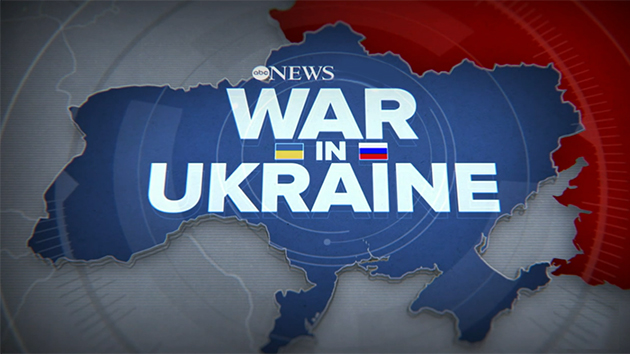
A seagull stands on the 16th-century Rialto Bridge over the Grand Canal in Venice, Italy, Monday, April 13, 2026. (Photo by Danil Shamkin/NurPhoto via Getty Images)

(VENICE, Italy) -- One of the world's most iconic cities could be heavily impacted by climate change and sea level rise in the coming years, leading researchers to search for solutions on how to protect it.

Venice, the historic Italian city known for its canals that serve as water traffic corridors, has been said to be sinking for nearly a century. The site within the vicinity of the Venetian Lagoon has flooded increasingly over the past 150 years, according to a paper published in Scientific Reports on Thursday.

Historically, there have been 28 events in which seawater flooding impacted at least 60% of the city, according to the paper. Eighteen of those events have taken place in the last century.

Piero Lionello, a professor of atmospheric physics and oceanography at the University of Salento in Italy and native Venetian, has noticed an uptick in flooding events throughout his lifetime, he told ABC News.

"The rate has been quite impressive the last three decades," he said.

Climate experts are now calling for long-term planning to protect the city from rising sea levels over the next several centuries.

The Venetian Lagoon is a "special system" because it is so connected to the Adriatic Sea, said Lionello, the lead author of the paper.

Proposed strategies to prevent flooding as sea levels rise include movable barriers, ring dikes -- which are circular or oval-shaped embankments designed to protect localized areas from floodwaters -- or even closing the Venetian Lagoon and relocating the city, according to the paper.

Currently, the city is defended by a trio of movable barriers at the edge of the Venetian Lagoon. The MOSE project, installed in the 1990s, is a system of mobile flood barrier shields as tall as a five-story building that can be raised to separate the lagoon from the Adriatic Sea during high tides.

The system allows the waterways of Venice to function normally during high tide and has prevented flood disasters from storm surge. But it won't be sufficient in the future, Lionello said.

"The present system, it will certainly be become inadequate," he said.

The existing movable barriers may be effective against sea level rise up to 1.25 meters, or about 4.1 feet, according to the paper. But this benchmark is likely to be exceeded by the year 2300 under a low-emissions scenario due to rising global temperatures and ground subsidence -- the gradual sinking of the ground -- the researchers said.

Dikes may be necessary to protect Venice's city center from the rest of the lagoon, according to the paper. The dikes would consist of walls surrounding the city, separating it from the lagoon, Lionello said.

Construction of dikes could cost between $600 million and $5.3 billion, according to the paper.

A "super levee" that could cost more than $35 billion to construct may be needed to close the lagoon and protect the land that is already below sea level.

If sea levels rise enough, it may be necessary for the city's residents and historic landmarks to be moved inland, the researchers said. Relocating the city could be necessary beyond a 4.5-meter, or nearly 15-foot, sea level rise, which is projected to occur after 2300 under a high emissions scenario, according to the paper. Relocating the city could cost up to $118 billion, according to the researchers.

This solution is the most "provocative" and would involve moving individual buildings and monuments inland, Lionello said.

"You can preserve a building. You can have different solution to keep people living there, but it will be a completely different Venice from the Venice that we have now," Lionello said.

The system of mobile barriers has been working overtime, according to officials. The MOSE barriers were lifted from the seabed to stop water from the Adriatic Sea from entering the lagoon 31 times during a six-month period between October 2023 and April 2024.

Climate scientists have predicted a steady rise in sea levels in the Adriatic Sea -- with the lagoonal ecosystem in Venice experiencing relative sea level rise of about 2.5 millimeters per year, a 2021 study found.

Over the past 60 years, high tides in the Venetian Lagoon have become more frequent.

Between 1870 and 1949, 30 high tides exceeded 1.1 meters -- or 3.6 feet -- the level above which the MOSE barrier system is activated, according to the Venice Tide Study Center. There were 76 such high tides between 2015 and 2024 alone.

Rapid action to protect the city of Venice from climate change is “essential,” especially since the construction of large-scale interventions could take decades, the researchers said.

Copyright © 2026, ABC Audio. All rights reserved.


'Massive' Russian attack on Ukraine kills 16, injures at least 100, Ukrainian officials say

A large fire burns near a shopping center following an overnight Russian missile strike in the Podilskyi, Obolonskyi, Shevchenkivskyi and Desnianskyi districts, on April 16, 2026 in Kyiv, Ukraine. (Photo by Kostiantyn Liberov/Libkos/Getty Images)

(LONDON) -- At least 16 people were killed and another 100 were injured in Ukraine as Russia targeted the country with a "massive" drone and missile attack on Wednesday and into Thursday morning, Ukrainian officials said.

Russia launched almost 700 drones and 19 ballistic missiles, along with cruise missiles, President Volodymyr Zelenskyy said. Ukraine shot down about 636 drones and "some" of the missiles, he added, saying, "Unfortunately, not all."

At least 16 people were killed across Ukraine, officials said. Zelenskyy said at least 100 people had been reported wounded "as of now."

"Tragically, there are fatalities in Odesa, Kyiv, and Dnipro," he said in a social media post. "Among those killed is a boy -- he was 12 years old. My condolences to the families and loved ones."

Most of the missiles targeted Kyiv, the capital, the president said, but damage and deaths were also reported across the country. Some missiles or drones that made it through Ukraine's defenses struck and damaged residential buildings, Zelenskyy said.

"Another night has proven that Russia does not deserve any easing of global policy or lifting of sanctions," Zelenskyy said. "Russia is betting on war, and the response must be exactly that: we must defend lives with all available means, and we must also apply pressure for the sake of peace with the same full force."

Russia has chosen to "deliberately terrorise civilians" with its attacks on residential areas, Antonio Costa, the European Council president, said on Thursday. The EU would continue to "increase pressure" on Moscow, he said.

"Russia must stop this war of terror," Costa said. "A comprehensive, just, and lasting peace for Ukraine based on the principles of the U.N. Charter and international law must be achieved."

Russian officials said on Thursday that Ukraine launched its own barrage of drones targeting several areas in Russia. Moscow said its military downed more than 200 drones. At least one Ukrainian drone struck a port on Russia's Black Sea coast, along with other coastal cities, the local governor said.

Copyright © 2026, ABC Audio. All rights reserved.

Husband of woman reported missing after going overboard in Bahamas interviewed by police again: Attorney

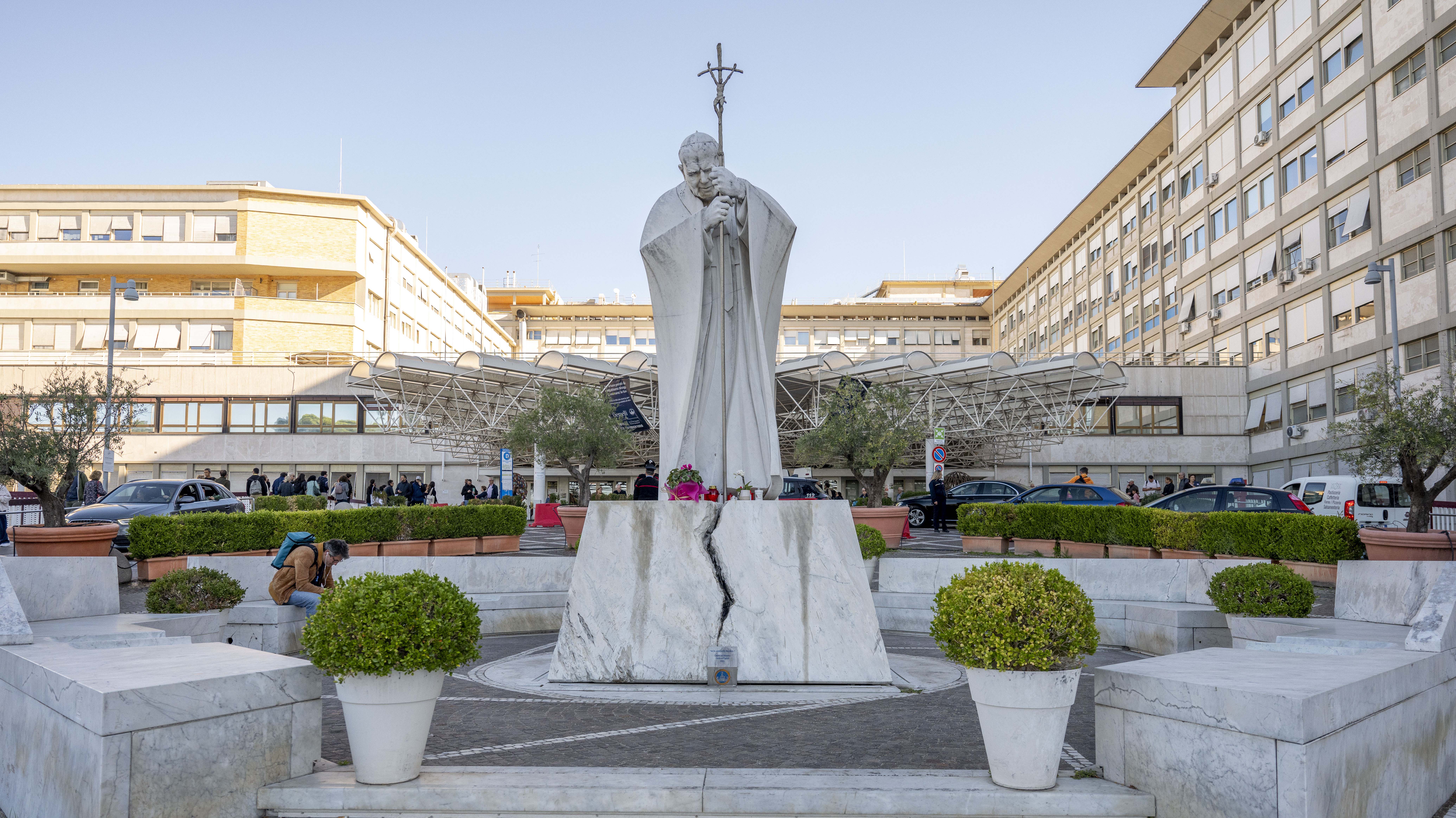
The Hookers' boat, "Soulmate," is seen in Marsh Harbor on Great Abaco Island in the Bahamas, April 8, 2026. (ABC News)

(NEW YORK) -- The husband of a woman who was reported missing in the Bahamas after going overboard on a dinghy was questioned again by police on Monday as he awaits any charging decision in connection with her disappearance, according to his attorney.

Lynette Hooker, 55, of Michigan, has been missing for over a week. She and her husband, Brian Hooker, 58, had departed Hope Town on the Abaco Islands for their yacht, Soulmate, in Elbow Cay around 7:30 p.m. on April 4, when bad weather caused Lynette Hooker to fall overboard, her husband told authorities.

Brian Hooker was arrested on Wednesday in connection with his wife's disappearance and interviewed by Bahamian police for approximately three hours on Friday. Police subsequently requested an extension to give them until Monday evening to make any charging decision, according to his attorney, Terrel Butler.

He was questioned by police again on Monday for about an hour, according to Butler, who said investigators did not present any new evidence. She also said police have not given Brian Hooker any updates on the search for his wife since his arrest. 

Police have until 7:20 p.m. ET Monday to charge or release him, according to Butler.

Butler said Brian Hooker is considered a suspect in his wife's disappearance and denies any wrongdoing.

Following his initial interview on Friday, Butler said Brian Hooker was "questioned in relation to causing harm, which resulted in her death."

"He definitely denies causing her death and he's still asking about her and is hopeful that she will be recovered," she continued, saying they have not been informed of any evidence that her body has been recovered. 

The attorney said Brian Hooker is "heartbroken" over the disappearance of his wife of 25 years and that his arrest has been "traumatic."

His arrest came after multiple sources told ABC News a criminal investigation had been opened into whether there was any wrongdoing in the case. The U.S. Coast Guard is leading the probe, according to a source familiar with the investigation.

In a statement posted to social media last Wednesday, Brian Hooker said "unpredictable seas and high winds" caused his "beloved Lynette to fall from our small dinghy" near Elbow Cay.

"Despite desperate attempts to reach her, the winds and currents drove us further apart. We continue to search for her and that is my sole focus," he said.

Brian Hooker told police that his wife was holding the boat key when she went overboard, causing the 8-foot hard-bottom dinghy's engine to shut off, according to the Royal Bahamas Police Force. He subsequently paddled the boat back to shore, arriving at a marina at around 4 a.m. on April 5, and reported his wife overboard, police said.

The Hookers documented their sailing travels on social media under the name "The Sailing Hookers."

Lynette Hooker's daughter, Karli Aylesworth, has called for a "full and complete investigation" into her mother's disappearance.

She told ABC News her stepfather, Brian Hooker, told her that her mom "fell out of the boat and that he threw a life jacket to her or something, and he doesn't know if she got it or not."

Lynette Hooker's mother, Darlene Hamlett, told ABC News she hopes "we find the truth" amid the investigation and alleged the couple have had a volatile relationship. 

"I just want the truth to come out and I'm hoping that they can do that, and I hope they find her and that that will help clear up all of this," she said.

Copyright © 2026, ABC Audio. All rights reserved.

'Momentary relief': World leaders react to US-Iran ceasefire

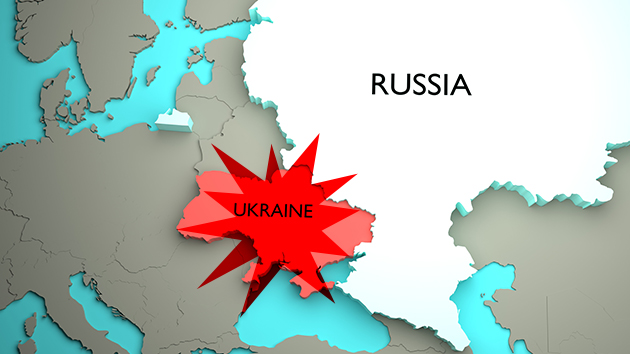
A teacher from Gurukul school of art paints a poster of US President Donald Trump (L) and Supreme Leader of Iran Mojtaba Khamenei (R) with a message welcoming two weeks of ceasefire between US and Iran outside their art school in Mumbai. (Ashish Vaishnav/SOPA Images/LightRocket via Getty Images)

(PARIS and LONDON) -- Foreign leaders expressed hope for a full peace deal to end the U.S.-Israeli war against Iran in their reactions to Tuesday's two-week ceasefire, which was first announced by President Donald Trump and later confirmed by Iranian officials.

British Prime Minister Keir Starmer said in a post to X that the ceasefire agreement "will bring a moment of relief to the region and the world. Together with our partners we must do all we can to support and sustain this ceasefire, turn it into a lasting agreement and re-open the Strait of Hormuz."

Italian Foreign Minister Antonio Tajani likewise suggested the ceasefire was "a very positive development" which "moves us toward a peace agreement -- for the civilian population, for the region, and for Israel -- but also for our economy."

German Friedrich Merz thanked Pakistan for its mediation efforts, adding in a post to X, "The aim now is to negotiate a lasting end to the war. We are in close coordination with our partners on this matter."

Ursula von der Leyen, the president of the European Commission, said the ceasefire brought "much-needed de-escalation" and said that further negotiations are "crucial."

Spanish Prime Minister Pedro Sanchez, who has been a prominent European critic of the war, said in a post to X that the ceasefire was "welcome news," but added, "Momentary relief must not make us forget the chaos, the destruction, and the lives lost."

"The Spanish government will not applaud those who set the world on fire just because they show up with a bucket," Sanchez added. "What is needed now: diplomacy, international law, and PEACE."

French President Emmanuel Macron stressed that the situation in Lebanon -- another theater of the conflict in which Israel is fighting against the Iran-backed Hezbollah militia -- is "critical."

Macron said the ceasefire extended to Lebanon, as did Pakistani Prime Minister Shehbaz Sharif, though Israeli Prime Minister Benjamin Netanyahu said overnight that Lebanon was not included in the agreement. Israel continued intense strikes in Lebanon, including on Beirut, on Wednesday.

Macron called the ceasefire "a very good thing" and said the question of Lebanon is "one of the most delicate.” Hezbollah, Macron said, made a "strategic error" by attacking Israel and dragging Lebanon into the regional crisis, but said Israel's strikes and occupation of southern Lebanon "cannot be a long-term response."

Persian Gulf and other regional nations also welcomed the ceasefire in Iran, though several reported fresh Iranian drone and missile attacks on Wednesday.

Saudi Arabia's Foreign Ministry expressed its support for the pause in a statement posted to X, while Qatar's Foreign Ministry described the ceasefire as "an initial step toward de-escalation." Doha also stressed "the necessity for the Islamic Republic of Iran to take the initiative to immediately cease all hostile acts and practices."

Oman -- traditionally a mediator of U.S.-Iranian talks -- said in a Foreign Ministry statement that it affirmed "the importance of intensifying efforts now to find solutions capable of ending the crisis at its roots and achieving a permanent cessation of the state of war and hostile acts in the region."

Jordan's Foreign Ministry in a post to X "emphasized the importance of opening the Strait of Hormuz and ensuring freedom of international navigation without restrictions in accordance with international law."

Egyptian President Abdel Fattah el-Sisi said in a post to X that the news "undoubtedly brought relief to the hearts of millions of peace-loving people across all corners of the earth," adding that Cairo valued Trump's "decision to heed the voice of reason."

The Turkish Foreign Ministry released a statement expressing its backing for the peace process, adding, "We will continue to extend all necessary support for the successful conclusion of the negotiations to be held in Islamabad," referring to Friday's planned talks.

Copyright © 2026, ABC Audio. All rights reserved.


As ceasefire begins, some Iranians express relief after days of living in limbo

Iranians hold national flags as they gather in Tehran's Revolution Square after the United States and Iran agreed to a two-week ceasefire, on April 8, 2026 in Tehran, Iran. (Majid Saeedi/Getty Images)

(LONDON) -- As President Donald Trump pulled back from threats to annihilate "a whole civilization" when the Iranian regime agreed to a ceasefire and open the critical Strait of Hormuz, some people in the Islamic Republic expressed relief after juggling feelings ranging from despair to doom.

Trump had given the Iranian regime a deadline of 8 p.m. ET Tuesday -- which would have been Wednesday, April 8, at 3:30 a.m. in Tehran -- for the Iranian government to strike a peace deal or risk the destruction of all bridges and power plants in Iran.

He later extended the deadline to two more weeks as Iran agreed to open the Strait of Hormuz and work to forge a peace deal.

Sohreh, a 33-year-old journalist and resident of Tehran, told ABC News she felt an immediate sense of "relief" when she heard that a ceasefire agreement had been brokered.

"My heart was about to stop," Sohreh said in a written message to ABC News of the hours she and other Iranian citizens spent on Tuesday bracing for the massive U.S. to strike on its power plants, bridges and infrastructure before the attack was called off. "I cried all day for Iran and prayed to a God I don't believe in: 'A miracle, please, send a miracle. I can't live after the destruction of Iran.'"

Leading up to the ceasefire announcement, Iranians who have been in contact with ABC News throughout the conflict, which began with a Feb. 28 U.S.-Israel joint attack, recalled moments of joy as it appeared the Iranian regime was about to be toppled and disappointment that the Islamic Republican Guard Corps (IRGC) had refused to give up the fight.

An internet blackout imposed by the regime has made it challenging to communicate with people inside Iran, so it's difficult to gauge how people in the country are feeling. Some have managed to get messages to ABC News.

"I am against the regime and I want them gone with every cell of my body. I have participated in the protests against the regime. But by no means I agree with a foreign power destroying what has been built by my people, for my people, and for the future of our children," Fatemeh, a 40-year-old engineer who lives in Tehran, told ABC News in a written statement on Monday.

Citing security reasons, Iranians like Fatemeh and Sohreh who have communicated with ABC News, spoke on condition that their real names not be used.

Sohreh recalled a rollercoaster of emotions since the conflict began, from hope that the regime would be toppled to despair that it was hanging on and prolonging the pain of regular Iranians.

"I danced so much to the news of Khamenei's death, so much that my legs hurt and I fell," Sohreh said in a message to ABC News on Monday, referring to Ayatollah Ali Khamenei, the country's supreme leader, who was assassinated in a strike on the first day of the conflict.

But as the war dragged on, Sohreh said she battled doubts that the U.S.-Israel attacks would bring the regime to its knees. "We ask ourselves what if the war continues?" she said.

"When they hit Asaluyeh, everyone was feeling terrible," Sohreh said of Monday's strike by Israel Defense Forces on Iran's southern petrochemical infrastructure in the Persian Gulf port city of Asaluyeh. "We wonder what to do if they hit the infrastructure. They don't belong to the Islamic Republic. They are built by our own children. They belong to Iran and the future of Iran."

On Tuesday morning, Trump posted an ominous message on his social media platform, saying, "A whole civilization will die tonight, never to be brought back again."

"I don't want that to happen, but it probably will," Trump wrote. "However, now that we have Complete and Total Regime Change, where different, smarter, and less radicalized minds prevail, maybe something revolutionarily wonderful can happen, WHO KNOWS?"

During a news conference on Wednesday morning, Defense Secretary Pete Hegseth declared "a historic and overwhelming victory on the battlefield.

"A capital V military victory," said Hegseth, adding that the U.S. military had "achieved every objective."

Hegseth said that prior to the ceasefire being announced, the U.S. military was prepared to carry out the threat Trump made on Tuesday morning.

"Had Iran refused our terms, the next target would have been their power plants, their bridges and oil and energy infrastructure, targets they could not defend and could not realistically rebuild. It would have taken them decades. And we were locked and loaded," Hegseth said.

He added, "President Trump had the power to cripple Iran's economy in minutes, but he chose mercy. He spared those targets because Iran accepted the ceasefire under overwhelming pressure."  

Trump's ominous statement on Tuesday came after he told reporters on Monday during the annual White House Easter Egg Roll, "The Iranian people, when they don't hear bombs go off, they're upset."

"They want to hear bombs because they want to be free," Trump said without attributing where he was getting his information from.

He went on to claim that the only reason Iranian civilians have not taken to the streets en masse to demonstrate against the regime is that "they will be shot immediately, and that's an edict. That's in writing."

Leila, a 36-year-old resident of Tehran who works as a manager of a shipping company, said she agreed with Trump, telling ABC News on Monday that when she doesn't hear bombs, she feels "upset." Leila, who described herself as anti-regime, said she longs for the day she sees American soldiers in Iran to save them.

In an earlier message Leila sent to ABC News on March 30, she said, "We don't have fear from the missile attacks, we just get very happy to watch them burning the bases of the IRGC."

Darius, a 38-year-old anthropologist from Tehran, told ABC News in a message sent on March 25 that he was initially anti-regime, but as the bombing continued, his opinion of the regime had started to change.

"The noise of the bombs and the fact that they are actually killing a lot of civilians pushes us more towards let's say rallying around the flag," Darius wrote. "We are fighting this war as a country and even though the Iranian state is not my cup of tea and even though I detest many of the things they do, still, I prefer to stand by their side against a Nazi in the White House."

At least 3,546 people, including 244 children and 1,616 other civilians, have been killed in Iran due to the U.S.-Israeli strikes since the war began, the U.S.-based Human Rights Activists News agency reported on Sunday.

Copyright © 2026, ABC Audio. All rights reserved.

Ukraine outshoots Russia in cross-border drone war for 1st time, March data suggests

A soldier of the Unmanned Systems Forces prepares a 'Salut' drone on March 31, 2026 in Kharkiv, Ukraine. (Nikoletta Stoyanova/Getty Images)

(LONDON) -- Ukraine launched more cross-border attack drones than Russia in a one-month period for the first time since the start of the ongoing war in 2022, according to daily data published by the Ukrainian Air Force and Russian Ministry of Defense, which was analyzed by ABC News.

Russia's defense ministry reported downing 7,347 Ukrainian drones during March, the highest monthly total ever reported by Moscow and an average of 237 craft each day. The defense ministry only publishes figures of Ukrainian drones it claims were shot down.

Ukraine's air force, meanwhile, said its forces faced 6,462 Russian drones and 138 missiles of various types across the course of the month, of which 5,833 drones and 102 missiles -- around 90% of drones and just under 74% of missiles -- were intercepted or suppressed.

Ukraine, therefore, faced a daily average of just over 208 drones and four missiles during March, according to the data published by Kyiv.

ABC News cannot independently verify the data released by either Russia or Ukraine. It is possible that both sides may seek to exaggerate the effectiveness of their air defenses, or to amplify the attacks against them as proof that their enemies are not interested in pursuing a peace deal, experts have suggested.

The combined tally of 6,600 Russian drones and missiles reported by Ukraine's air force across the month marks a new record high for a single month of Russian long-range attacks.

Ukraine's air force publishes what it says is a daily tally of Russian drone and missile strikes, including information as to how many munitions were intercepted and how many hit targets.

Russia launched the month's largest overall attack in a 24-hour period by either side. Ukraine's air force said Moscow launched 948 drones and 34 missiles into the country on March 24.

Long-range drone and missile strikes have been a key element of the conflict as both Kyiv and Moscow seek to degrade the other's economy and undermine their ability to prosecute and fund the ongoing war. The strikes have continued despite the resumptions of U.S.-brokered peace talks.

Russia has thus far been able to launch more drones and missiles into Ukraine, with Ukrainian leaders citing Moscow's nightly barrages as a severe threat to the country's strategic position. But March's data suggests the balance may be shifting more in Ukraine's favor, as Kyiv's long-term efforts to expand its drone and missile capabilities bear fruit.

Ukrainian President Volodymyr Zelenskyy has been clear on Kyiv's plans to expand Ukraine's long-range strike capabilities.

"Our production potential for drones and missiles alone will reach $35 billion next year," Zelenskyy said in October. "Despite all the difficulties, Ukrainians are creating their national defense product that, in certain parameters, already surpasses many others in the world."

"Never before in history has Ukrainian defense been so long-range and so felt by Russia," Zelenskyy added. "We must make the cost of war absolutely unacceptable for the aggressor -- and we will."

To date, the majority of Ukrainian strikes are believed to have been conducted using relatively cheap, Ukrainian-made drones. Increasingly, Ukraine is also using interceptor drones designed and built by Ukrainian companies to intercept incoming Russian strike drones.

Ukraine is now producing its own cruise missiles -- most notably the Flamingo, which Kyiv says has a range of more than 1,800 miles -- but its drone arsenal still accounts for the vast majority of projectiles reported shot down by the Russian defense ministry, according to daily data published by Moscow.

Over the past year, Ukraine has put a special focus on attacking Russian oil refining and transport facilities, hoping -- according to Ukrainian leaders -- to cut into a key funding stream for Moscow and its military.

Ukraine's most high-profile attacks of March came at Russia's Baltic Sea ports of ‌Ust-Luga and Primorsk -- key oil export hubs. Kremlin spokesman Dmitry Peskov denounced the strikes as "terrorist attacks."

Zelenskyy in February said Russia's energy sector is "a legitimate target" for attacks by Ukraine, because Russia uses revenue from sales of oil to procure weapons used to attack Ukraine.

"We do not have to choose whether we strike a military target or energy," Zelenskyy said while addressing students at the National Aviation University in Kyiv. "He sells oil, takes the money, invests it in weapons. And with those weapons, he kills Ukrainians," Zelenskyy said of Russian President Vladimir Putin.

Russian officials have broadly sought to downplay the Ukrainian attacks, with most reports of damage or casualties attributed to falling debris from intercepted drones, rather than craft that found their mark. When Russian officials do acknowledge damage, they often describe the strikes as “terrorist attacks.”

But plenty of publicly available information -- including video footage and photographs of the attacks -- indicate that a significant number of Ukrainian drones do penetrate Russian air defenses and impact at sensitive military and industrial sites.

Meanwhile, drone incursions into neighboring countries -- among them NATO allies -- have raised concerns of the war spilling over into non-combatant nations.

NATO aircraft are regularly scrambled in NATO nations like Poland and Romania in response to Russian drone attacks along Ukraine's western borders.

Allied officials have reported Russian drone violations in Romania, Poland, Lithuania and Latvia. Russian drones have also overflown Moldova, which is not a NATO member. Russian officials have denied responsibility for such incursions.

Stray Ukrainian drones have been reported falling in Finland, Estonia, Latvia and Lithuania.

ABC News’ Fidel Pavlenko contributed to this report.

Copyright © 2026, ABC Audio. All rights reserved.

Palestinian babies separated from parents at start of war, reunited after 2 years

A Palestinian mother hugs her child as eight children evacuated from Gaza to Egypt through the Rafah Border Crossing during 2023 land attacks due to health issues return to Gaza after completing treatment, coordinated by the World Health Organization (WHO) at Nasser Medical Complex in Khan Yunis, Palestine, on March 30, 2026. (Photo by Hani Alshaer/Anadolu via Getty Images)

(NEW YORK) -- When Sundus al Kurd and her daughter Bissan were separated at the start of the Israel-Hamas war in 2023, she wasn't sure she'd see her again. Bissan was only a few days old when her mother allowed her to be medically evacuated from the Gaza strip to Egypt.

The premature baby's life was saved, along with others, by the World Health Organization and Palestinian Red Crescent during the height of the conflict, but now the two have been reunited.

"After all this time, my daughter is finally back in my arms!" al Kurd, a young Palestinian mother, exclaims as she held her child for the first time in over two years.

"Every day, I lived with fear -- fear that I might never hold her again, fear that she might forget me. But the moment I held her in my arms again, it felt like she had never been away. That moment was complete joy!" the 27-year-old al Kurd told ABC News.

Bissan, who has spent the last 2 1/2 years in Egypt, had been one of 33 premature babies trapped inside the Al Shifa hospital as the Israeli military laid siege to it in November 2023.

"Being reunited with my daughter is something I cannot fully describe. It is a mix of relief, love, and something deeper -- like life returning to me after being paused for years," al Kurd said.

"The first night we spent together was very emotional. I couldn't sleep. I kept watching her, holding her, making sure she was really there beside me. I was afraid to close my eyes, as if it was all a dream that might disappear," she said.

Bissan's life had been in imminent danger in November 2023, doctors said. The neonatal unit she was in at Al Shifa hospital was running out of fuel and oxygen, cut off by the Israeli army, which had encircled the hospital, saying that Hamas had a hidden command center in its precincts, something both Hamas medical teams there strongly denied.

"They were meant to die without incubators, without oxygen, without water, but they survived every single stage of this terrible reality," Dr. Ahmed Mokhallalati, the former head of plastic surgery at Al Shifa Hospital, told ABC News.

Mokhallalati was one of the few doctors who remained at Al Shifa throughout the Israeli siege.

"Most of the doctors were surgeons, not even pediatricians, but we felt we had to do our best to keep these kids alive," he said. "We felt these kids were like our own babies. Every morning, we would go just to make sure they were still alive."

He said that the extreme danger of the situation forced some parents to abandon their babies.

"There were no parents because the hospital was bombed and people were forced to flee to save their other children," Mokhallalati said. "In the calculus of survival, mothers fled with the children who could run and left behind those who could not, making an impossible choice."

The premature babies were left fighting for their lives for days, with one doctor and six nurses caring for them in ever-worsening conditions, he said.

"We did not know their names, we did not know their parents. They had no one to take care of them. They were wearing only small wristbands, usually with their mothers' names, and that was the only thing we knew about them," Mokhallalati said.

Not all the babies survived those difficult days. Five died as the team struggled to keep them fed and warm, but Mokhallalati was amazed that so many of the babies made it.

"They were meant to die at many stages but they survived every single challenge," adding, "They were the only feeling of hope we had in all of this chaos and destruction."

On Nov. 19, 2023, they were rescued after the WHO and the Palestinian Red Crescent were given access to the hospital. They carried the precious cargo through a war zone to a hospital in Rafah, in southern Gaza, before taking them across the border to Egypt, officials said.

"Twenty-eight were evacuated to Egypt, but seven more died there due to the difficult conditions, leaving 21 survivors. Of those, 11 have now returned on March 30, while four others came back earlier when Rafah crossing opened, and six remain in Egypt with their families," Dr. Ahmed Al-Farra, the head of pediatrics and neonatal care at Nasser Hospital in Gaza, told ABC News.

Among those returning was 2-year-old Azzhar Kafarna. Her mother, Heba Saleh, described the ordeal of their separation to ABC News.

"For two and a half years, I felt something missing all the time," she said.

"I missed everything -- her first smile, her first steps, even the little things that any mother waits for. I used to imagine her ... how she looks now, how her voice sounds, and if she would recognize me when we finally meet," Saleh said.

She was nervous about their reunion, "When I saw her again, I didn't know what to feel. I just hugged her tightly. It felt like I was holding all the days we lost in that one moment."

Al-Farra examined all the toddlers when they returned to Gaza this week.

"All of the children are in generally good condition, with normal weight and growth, but many are facing complications linked to extreme prematurity," he said.

Al-Farra says many of them, "have vision problems and need glasses because their eye nerves were not fully developed," like Bissan, who wears a bright red pair of spectacles.

However, not all of them have come back to happy reunions.

"I don't think all of these children have parents to return to. Some of their families were likely killed during the war," Al-Farra said.

"In one case, there is real confusion over the child's identity, with more than one person claiming the baby. We are still trying to identify the family, but without access to DNA testing in Gaza, we cannot confirm who the child belongs to," he said.

Fear returning to Gaza

Both the mothers ABC News spoke with were nervous about their children returning to Gaza.

"As a mother, I feel everything at once. I'm happy she's finally with me ... but at the same time, I feel guilty, even though I had no choice. I keep thinking about all the moments I wasn't there for." Saled said.

"And of course, I'm worried about raising her in Gaza. I want her to feel safe, to live a normal life, but the situation here is not easy," Saled said.

That sentiment was echoed by al Kurd.

"I am also worried. My daughter has never heard the sound of bombing before. I am afraid of how she might react if she experiences it here in Gaza. This fear is always in my heart."

"I wish for my daughter to have a better future, a life that is safer and more stable than the one we are living now," al Kurd said.

Copyright © 2026, ABC Audio. All rights reserved.


US fighter jet down in Iran: 1 crew member rescued as search continues, officials say

(WASHINGTON) -- A U.S. fighter jet appears to have been shot down by Iran over Iranian territory, American officials confirmed to ABC News, marking a new and potentially dangerous point in the conflict.

One crew member aboard the downed two-seater F-15E has been rescued, according to two U.S. officials. The status of the other crew member is unknown, according to the official, and the search and rescue effort continues.

Combat search and rescue missions have become relatively rare for U.S. forces after more than a generation of near-total air dominance, with American aircraft typically operating with limited threats to aircraft in the wars in Iraq and Afghanistan.

The early indications that the U.S. fighter was brought down by enemy fire would mark the first time Iran has successfully downed a manned American aircraft in the war, which started in February.

In late March, an American F-18 fighter jet narrowly dodged an Iranian surface-to-air missile, according to a U.S. official. Earlier that month, an American F-35, the Pentagon’s most advanced stealth fighter jet, had to make an emergency landing after being struck by Iranian fire. Three F-15s were also brought down over Kuwait in a friendly fire episode earlier in the war, though all six pilots ejected safely, according to U.S. officials.

There are photos of the fighter jet that were released by Iranian state media that have not been independently verified by ABC News.

President Donald Trump has been briefed on the downed fighter jet, according to White House press secretary Karoline Leavitt. Another U.S. official said Trump has been briefed on the rescue and condition of the recovered crew member.

Hegseth, Trump touted American air dominance over Iran

The incident comes after Secretary of Defense Pete Hegseth and other U.S. officials have said that Iran's military capabilities have been severely crippled and that the U.S. has "total air dominance" over Iran.

Trump, in a primetime address to the nation earlier this week, said the U.S. was "nearing completion" of its military objectives and that Tehran's anti-aircraft abilities had been decimated.

"We’ve done all of it. Their navy is gone. Their air force is gone. Their missiles are just about used up or beaten," Trump said in his speech on Wednesday night.

"They have no anti-aircraft equipment," Trump added in his remarks. "Their radar is 100% annihilated. We are unstoppable as a military force."

The Islamic Revolutionary Guard Corps has made a number of false claims about U.S. aircraft being downed but the U.S. has pushed back on those.

Iran has maintained at least some ability to continue with attacks targeting U.S. facilities in the Middle East and other countries in the region, wounding more than 300 U.S. service members, according to U.S. officials. The number of wounded has increased at a relatively steady rate each week, data reviewed by ABC News shows. Thirteen service members have been killed in action since the war began five weeks ago, according to Pentagon data.

Iran's Parliament Speaker Mohammad Bagher Ghalibaf, with whom Trump has said he is negotiating, taunted the U.S. over the missing crew member in a social media post on Friday.

In the post, Ghalibaf suggested that the U.S. war effort had shifted from pursuing "regime change" to trying to locate and rescue downed pilots.

Ghalibaf was the first top authority of the Islamic Republic to comment on the missing crew members.

Trump told ABC News Chief Washington Correspondent Jonathan Karl in a phone call earlier this week that the new leadership is better than what Iran had before.

Former U.S. Ambassador to Saudi Arabia Michael Ratney called the Iranian attack "disturbing" in an interview on ABC News Live.

"As a war like this drags on, it becomes increasingly likely that some incident like this happens. It's disturbing for a couple of reasons. One is it potentially represents a major escalation. If the missing crew member remains missing, huge political pressure in the United States to do anything to find that person. I dare say they'll be uncompromising," Ratney told ABC News Live's Elizabeth Schulze on Friday. "The other problem is it becomes just a huge political preoccupation in the United States. It becomes the sole story anybody thinks about. At the same time, the war is still going on, and there's a lot of crises globally at this point."

What do pilots do to prepare for being shot down?

Pilots undergo training in SERE -- which stands for Survival, Evasion, Resistance and Escape. It's a program designed to prepare them for the possibility of isolation behind enemy lines.

Under survival training, airmen are taught to stabilize themselves in the immediate aftermath of an incident, administering self-aid if wounded and securing basic necessities such as shelter, water and food, according to publicly available Air Force training materials.

Survival training often dictates the pilot leave the crash area, as it’s likely to be a focal point for hostile forces.

"To stay in the vicinity of the crash or parachute landing site may lead to capture,” an Air Force training manual on pilot survival training says. 

Evasion training follows -- during which pilots learn how to move undetected through hostile terrain, according to the training materials. Pilots learn to navigate using maps and compasses, as well as natural cues such as stars and terrain features including rivers, bridges and other landmarks to orient themselves and move toward friendly forces.

The curriculum also includes resistance techniques aimed at helping troops endure interrogation and psychological pressure if captured. Finally, escape training focuses on recognizing vulnerabilities in captivity and exploiting opportunities to break free, according to the training materials.

This is a developing story. Please check back for updates.

Copyright © 2026, ABC Audio. All rights reserved.

'Leave Iraq now': Americans in Baghdad warned of potential Iran-aligned militia terrorist attacks

Iraqi Shiite militia groups organize a military parade as part of the 'World Quds Day' events in Baghdad, Iraq, March 28, 2025. (Anadolu via Getty Images)

(WASHINGTON) -- U.S. officials have issued a new warning to Americans still in Iraq, advising them to leave the country immediately as Iraqi terrorist militia groups aligned with Iran may "intend to conduct attacks" in central Baghdad.

"U.S. citizens should leave Iraq now," said the alert issued on Thursday by the United States Embassy and Consulate in Iraq, which has previously issued warnings for Americans to leave the country due to security risks.

The new alert comes as the U.S.-Israeli war on Iran has entered its second month.

The security alert also came just days after an American journalist, Shelly Kittleson, was kidnapped in broad daylight on a busy street in Baghdad, allegedly by an Iran-linked militia group.

"Iraqi terrorist militia groups aligned with Iran may intend to conduct attacks in central Baghdad in the next 24-48 hours," the U.S. Embassy's alert said.

The embassy's statement added that Iran and Iran-aligned terrorist militias have already conducted "widespread attacks against U.S. citizens and targets associated with the United States throughout Iraq, including the Iraqi Kurdistan Region."

The alert cautioned Americans to be aware that militia groups "may claim to be associated with the Iraqi government."

"Terrorists may carry identification denoting their status as Iraqi government employees," according to the alert.

In addition to U.S. citizens, terrorist militias might also target businesses, universities, diplomatic facilities, energy infrastructure, hotels, airports and "other locations perceived to be associated with the United States," according to the alert.

While telling U.S. citizens to leave the country immediately, U.S. officials also said the only escape routes out of Iraq are overland to Jordan, Kuwait, Saudi Arabia and Turkey because the airspace is closed, preventing commercial airlines from flying out of Iraq.

"Local ground transportation options are functioning. Americans should depart now via one of these overland routes," according to the alert.

For the time being, the U.S. Mission in Iraq remains open. But the alert advised Americans not to go there.

"Do not attempt to come to the Embassy in Baghdad or the Consulate General in Erbil in light of significant security risks," the alert said.

The search for Kittleson, 49, a freelance journalist originally from Wisconsin, continued on Thursday, according to the Iraqi Ministry of Interior.

"We have no answer or explanation," the interior ministry said in a statement on Thursday about Kittleson's abduction.

In a security camera recording verified by ABC News and confirmed by Iraq's interior ministry to show the moment Kittleson was kidnapped on Tuesday, the journalist is seen standing on a sidewalk as a silver car approaches before she is pushed towards the car, which then quickly speeds away.

One suspect alleged to be involved in the kidnapping was arrested when one of the cars fleeing the scene crashed and overturned, according to Iraq's interior ministry. Kittleson had been forced into another car that got away.

Dylan Johnson, assistant secretary of state for global public affairs for the State Department, said in a statement on Wednesday that the suspect has ties to the Iranian-aligned militia group Kataib Hezbollah.

Copyright © 2026, ABC Audio. All rights reserved.

Iran regime weaker, more radical after US-Israel assassination campaign: Analysts

A man sweeps up debris near a residential building that was hit in an airstrike in the early hours of March 27, 2026 in Tehran, Iran. (Majid Saeedi/Getty Images)

(LONDON) -- President Donald Trump and Israeli Prime Minister Benjamin Netanyahu kicked off their joint military campaign against Iran in late February, urging the fall of the Islamic Republic.

"When we are finished, take over your government. It will be yours to take. This will be probably your only chance for generations," Trump said, addressing Iranians in announcing the start of "major combat operations."

A month of unrelenting combined U.S.-Israeli strikes appears to have significantly eroded Iran's military capabilities and killed many of its most senior leaders, including Supreme Leader Ayatollah Ali Khamenei, who died alongside dozens of top Iranian officials in a series of airstrikes on his official residence in Tehran in the opening salvos of the war.

But despite Trump's assertion that the "war has been won," Iranian forces continue to launch attacks on Israel, regional U.S. bases and American partners across the Middle East, while commercial shipping through the strategic Strait of Hormuz remains constrained, with large numbers of cargo vessels in limbo on either side of the narrow waterway at the southern entrance to the Persian Gulf.

Trump has also asserted that there had been "complete regime change," with the leaders the U.S. is now dealing with in recently announced negotiations "more moderate" and "much more reasonable," the president told ABC News' Jonathan Karl.

Trump named Mohammad Bagher Ghalibaf, the powerful speaker of the Iranian parliament, as the direct U.S. negotiating partner, though Ghalibaf has denied the assertion.

But in Tehran, the cadre of officials – Ghalibaf among them – emerging to take the reins of power appear as committed as the slain figures they are replacing, many of them veterans of the powerful Islamic Revolutionary Guard Corps (IRGC), analysts have said.

The regime in Tehran, according to Danny Citrinowicz – the Israel Defense Forces' former top Iran researcher, now at the Institute for National Security Studies think tank in Israel – "is weaker than it was before the conflict, but it is also more radical. The IRGC has further consolidated its influence over decision-making, eroding what little internal balance once existed within the regime."

The war appears to have given Tehran long-term leverage over the Strait of Hormuz – a "weapon of mass disruption," as described by Ali Vaez of the International Crisis Group during an online briefing hosted by the think tank this week.

If the Islamic Republic survives the war, and its immediate aftermath by suppressing simmering anti-regime movements, its new leaders may be emboldened to retain perceived strategic advantages, chief among them control of the Strait of Hormuz, analysts who spoke to ABC News said.

That regime sentiment seems to be crystalizing. Ghalibaf, for example, told the IRNA state news agency that Iran's strategy now rests on its control of three pillars: "missiles, the streets, and the Strait."

Inside Iran, some sense that shift. Darius – who did not wish to use his real name for fear of reprisal – told ABC News from Tehran of a growing sentiment that "the source of legitimacy for the Islamic republic is shifting" from the clerical establishment to the IRGC.

"Now, the de facto leaders of the country are the generals in the IRGC. And they are actually running the show at the moment," Darius said.

IRGC ascendant

The IRGC was formed shortly after the Iranian Revolution by Ayatollah Ruhollah Khomeini in 1979, ultimately emerging as the new Islamic Republic's primary tool for projecting its ideology and influence beyond its own borders.

The IRGC entrenched and expanded its power during the Iran-Iraq War from 1980 to 1988. With its battlefield exploits and ideological zeal, the IRGC came to embody the wartime concept of "sacred defense," Johns Hopkins University professor Vali Nasr wrote in his recent book, "Iran's Grand Strategy."

Observers have long considered the IRGC to be the most powerful military, political and economic institution in Iran.

Even before the most recent U.S.-Israeli campaign against Iran, many experts warned that decapitation strikes or a push for regime change risked empowering the IRGC to seize the state's other mechanisms of power – though others suggested the force had no need to openly seize control, given its de facto hold over the country.

The new supreme leader, Mojtaba Khamenei, the son of Ali Khamenei, served in an elite IRGC unit during the Iran-Iraq War, and analysts have suggested his candidacy was strongly supported by the force.

Mojtaba Khamenei's newly appointed military adviser, Mohsen Rezaei, was drawn from the senior ranks of the IRGC, as was the new secretary of Iran's Supreme National Security Council, Mohammad Bagher Zolghadr, who was selected to replace Ali Larijani when the latter was killed by Israeli airstrikes in mid-March.

Meanwhile, IRGC veteran Ghalibaf – who has reportedly long been close to Mojtaba Khamenei – remains alive and appears to be in a position of influence, one of the few top prewar officials to have survived the U.S.-Israeli campaign.

Inside Iran, some sense that shift. Darius told ABC News from Tehran of a growing sentiment that "the source of legitimacy for the Islamic republic is shifting" from the clerical establishment to the IRGC.

"Now, the de facto leaders of the country are the generals in the IRGC. And they are actually running the show at the moment," Darius said.

Reading the 'mosaic'

Iranian Foreign Minister Abbas Araghchi credited a "mosaic defense" strategy with enabling the Iranian military to launch retaliatory strikes despite the killing of so many senior military officials in the opening hours of the U.S.-Israeli campaign.

That decentralized approach also appeared to cause some tactical confusion. Araghchi and Iranian President Masoud Pezeshkian, for example, both denied Iranian responsibility for several reported Iranian drone and missile attacks in the region in the days after the war erupted.

A decapitated regime in Tehran may pose challenges to American negotiators seeking a peace deal, Citrinowicz said, telling ABC News that the killings have created a "worse" strategic situation by dispersing power.

The centralized decision-making power enjoyed by Ali Khamenei is no more, he said. "Now, how are you going to work with them? It's going to be very hard to reach an agreement with them," Citrinowicz said, referring to the newly emergent group of leaders.

Trump himself appeared to acknowledge a diffusion of power in Iran as a result of the American-Israeli assassination campaign. "We have nobody to talk to, and you know what, we like it that way," the president said earlier this month.

Secretary of State Marco Rubio told "Good Morning America" this week there are "fractures" within the Iranian leadership, though he would not say with whom the administration is in contact.

Yossi Kuperwasser – the former head of the IDF's military intelligence research division – told ABC News that the emergence of hardliners "was to be expected."

"Once you eliminate Khamenei, he's not going to be replaced by some wishy-washy character, but somebody who is committed to the cause and the IRGC is going to be in charge," Kuperwasser said.

But Kuperwasser also noted that figures currently touted as Iranian negotiators, such as Ghalibaf, might not live to see the end of the war. Indeed, Larijani was often noted as among the prime negotiating candidates before his killing. "I'd guess there are going to be more eliminations," Kuperwasser said.

As the war progressed, both U.S. and Israeli officials have distanced themselves from earlier suggestions of regime change. Instead, officials refocused the strategic narrative on their ambitions to degrade Iran's conventional military – especially ballistic missile – and nuclear programs.

These targets, according to Kuperwasser, were always the Israeli priority.

"Simultaneously, we are trying to weaken the regime so as to create the conditions that can be used by the people of Iran in order to promote something that can bring about the removal of the regime from power," Kuperwasser said. But that will not necessarily occur in the short term, he added.

'Missiles, the street, the strait'

Citrinowicz said that whatever structure emerges to negotiate with the Trump administration will likely be influenced toward more hardline demands by the killing of its predecessors.

On the nuclear file, too, "it goes without saying" that Tehran's outlook will have shifted, Citrinowicz said. Before the war, Iranian leaders had already publicly committed not to pursue nuclear weapons, though Tehran was refusing to accept Trump's demands of zero enrichment. Now, Citrinowicz said, the new Iranian leadership "might find themselves rushing toward a bomb."

Iran also has more leverage in the Strait of Hormuz than it did before the conflict, even with the significant military degradation that the U.S. and Israel appear to have inflicted. Officials in Tehran have suggested that Iranian control over the strait – and the requirement for those transiting it to coordinate with Tehran and pay tolls – is the new baseline.

Rubio hinted at long-term disruption in the Persian Gulf last week. "Immediately after this thing ends, and we're done with our objectives, the immediate challenge we're going to face is an Iran that may decide that they want to set up a tolling system in the Strait of Hormuz," Rubio said.

Hamidreza Azizi of the German Institute for International and Security Affairs think tank said during the Crisis Group briefing that Tehran will be set on a conclusive settlement, not merely a ceasefire that would allow the U.S. and Israel to rearm and resume the conflict at a later date, as was the case after the 12-day conflict in June.

"Deep inside Iran's strategic thinking, there is an understanding that ceasefires are only a means for the United States and Israel to buy time," Azizi said. While before the conflict, Tehran appeared willing to make concessions on the nuclear file and other issues, now Iranian leaders see an opportunity to achieve what they were unable to across years of negotiations.

The endgame, Azizi said, could be one in which Iran preserves "some sort of leverage" over the Strait of Hormuz or secures "substantial sanctions removal."

For its part, Citrinowicz said the U.S. appears to be scrambling. "There are so many people in the U.S. that understand this regime, but the administration is behaving like it's Venezuela. It's crazy," Citrinowicz said, referring to the American operation in January to seize Venezuelan President Nicolas Maduro and support his vice president, Delcy Rodriguez, as Maduro's successor.

Last week, the U.S. delivered 15-point plan to end the war, which was widely interpreted as a blueprint for Tehran's capitulation. Iranian demands are likewise maximalist, calling for reparations and for the U.S. to abandon its regional bases.

"Nobody's getting their wish list," Dalia Dassa Kaye of the UCLA Burkle Center for International Relations said during this week's Crisis Group briefing.

In the meantime, the battlefield costs will rise and geopolitical implications deepen across the Middle East. "Even if this ends tomorrow," Kaye said, the costs have already been paid. "It's going to take years to recuperate the damage."

"This is not something you put back in a box," he added.

ABC News' Desiree Adib and Somayeh Malekian contributed to this report.

Copyright © 2026, ABC Audio. All rights reserved.
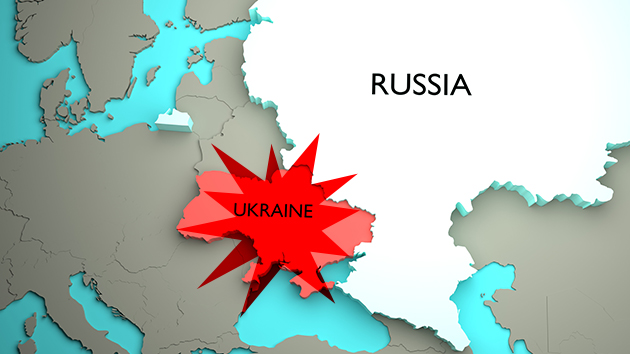

Iran war timeline: 1 month of escalating strikes, broadening conflict

A view of gigantic poster as daily life continues despite the ongoing conflict in Tehran, Iran on April 1, 2026. (Fatemeh Bahrami/Anadolu via Getty Images)

(LONDON) -- President Donald Trump is set to address the nation on Wednesday evening with an "important update" on the ongoing U.S.-Israeli war against Iran, which was launched on Feb. 28.

ABC News has collated a timeline of the key events in the conflict to date.

Feb. 28: Combined U.S.-Israeli airstrikes began, with Iranian Supreme Leader Ayatollah Ali Khamenei killed alongside dozens of senior political and military leaders in strikes on his office in Tehran. Iran immediately began retaliatory attacks targeting Israel, U.S. facilities and allies across the Middle East.

The opening salvo of strikes targeted Iranian government and military sites across the country, but there were allegations of collateral damage. The most significant was an airstrike on a girls' elementary school in the southern city of Minab, which Iranian state media said killed 168 people.

March 1: Six American troops were killed in an Iranian drone strike on a U.S. base in Port Shuaiba, Kuwait -- the first U.S. personnel to be killed in the conflict. Three U.S. F-15 fighter jets are also shot down by friendly fire from Kuwaiti air defenses.

The first commercial tankers were struck by projectiles in the Strait of Hormuz, marking the beginning of Iran's efforts to choke the flow of shipping through the strategic chokepoint.

March 2: The Iran-aligned Hezbollah militant group in Lebanon launches attacks into northern Israel, framing them as retaliation for several months of Israeli airstrikes across Lebanon. Israel responded by intensifying its campaign -- including with fresh strikes in Beirut -- and launching new ground operations along the shared border.

March 4: The Iranian IRIS Dena frigate was sunk by a U.S. submarine off the coast of Sri Lanka, killing at least 104 crew members, according to the Iranian military.

The Israeli military issued an "urgent warning" to all residents of southern Lebanon located south of the Litani River ahead of intended strikes, ordering them to immediately evacuate and head north of the river — highlighting a vast area.

March 8: Mojtaba Khamenei was selected by Iran's Assembly of Experts as the country's next supreme leader, succeeding his father who was killed on Feb. 28. Mojtaba Khamenei's candidacy was reportedly backed by the Islamic Revolutionary Guards Corps, in which the new leader once served.

March 12: A U.S. KC-135 refueling aircraft went down over western Iraq, killing six airmen. Another aircraft involved in the incident was damaged but able to land safely.

March 17: Ali Larijani, the influential secretary of Iran's Supreme National Security Council, was killed in an Israeli strike in Tehran.

March 18: The Israeli military strikes the South Pars gas field in the Persian Gulf, which is shared by Iran and Qatar. The attack signaled a move toward the targeting of energy and critical infrastructure targets, prompting Tehran to warn it would target energy targets across the Gulf.

March 20: Iran is accused of launching a missile attack targeting Diego Garcia, a U.S.-U.K. military base in the Indian Ocean, around 2,500 miles from Iranian territory. The U.S. and Israel said the attacked showed that the range of Iranian missiles was longer than Tehran previously admitted.

March 22: Trump issued a 48-hour ultimatum for Iran to open the Strait of Hormuz or face punishing strikes on critical energy infrastructure. The president later extended his deadline.

March 24: Airstrikes targeted three major Iranian steelworks, reflecting an apparent shift in U.S.-Israeli strategy toward degrading Iran's economic base.

Iranian drones and missiles targeted the Prince Sultan Air Base in Saudi Arabia, damaging several American aircraft -- among them an E-3 Sentry AWACS aircraft -- and wounding multiple service members.

Israeli Defense Minister Israel Katz said the Israeli military will destroy homes in southern Lebanon, just as it did in the war-torn Gaza Strip, in a continued effort to eliminate Hezbollah militants from the area. Israel will implement "the Rafah and Beit Hanoun models," Katz said, referring to two Gaza border towns that Israel destroyed in its offensive in the Palestinian enclave.

March 28: The Iran-aligned Houthis rebels in Yemen fired a ballistic missile toward Israel, marking their first involvement in the conflict.

March 28: U.S. Central Command announces the arrival of some 3,500 U.S. sailors and Marines in the Middle East aboard the USS Tripoli, amid reports of a possible American ground operation against Iran. Around 1,500 soldiers with the 82nd Airborne Division are also expected in the region.

March 30: Trump again demanded the end of Iranian harassment of shipping in the Strait of Hormuz, threatening to broaden U.S. strikes to target Iranian energy facilities and desalination plants.

March 31: Katz says Israeli forces will occupy Lebanese territory up to the Litani River -- around 18 miles north of the Israeli border -- and block the return of hundreds of thousands of displaced residents.

April 1: Trump prepares for an "important" address to the nation related to the war in Iran.

Copyright © 2026, ABC Audio. All rights reserved.


King Charles III to address Congress on April 28, leaders say

King Charles III speaks on March 27, 2026 in Oxford, England. (Kate Green/Getty Images)

(LONDON) -- King Charles III will address a joint meeting of Congress on April 28 as part of his upcoming state visit to the U.S., according to a joint statement issued by Congressional leaders on Tuesday.

The address, the statement said, "celebrates the 250th anniversary of American independence and the enduring special relationship between the United States and the United Kingdom."

The statement was issued by House Speaker Mike Johnson, Senate Majority Leader John Thune, Senate Minority Leader Chuck Schumer and House Minority Leader Hakeem Jeffries.

“This year, the United States will mark the 250th anniversary of its independence. As we celebrate this historic milestone and recommit ourselves to the principles upon which our nation was founded, we also recognize that the American experiment endures in no small part because of the British tradition from which it sprang," the statement said.

"We believe an address to Congress will provide a unique opportunity to share your vision for the future of our special relationship and reaffirm our alliance at this pivotal time in history," it added.

Johnson posted about the invitation on X, noting the U.S. and U.K. "share one of the most consequential partnerships in history."

President Donald Trump said that the state visit will take place from April 27 until April 30.

Preparations for the visit come at a tense moment between the Trump administration and NATO, of which Britain is a member, over the reluctance of allies in the intergovernmental military alliance to join the ongoing U.S.-Israeli war in Iran. On Wednesday, Trump said in an interview that he is considering pulling the U.S. out of NATO.

In a press conference on Wednesday, British Prime Minister Keir Starmer said the U.K. is fully committed to NATO and that he isn't going to change his position on the war.

"I have to act in our national interests," Starmer told reporters. "This is not our war," he continued, noting "a good deal of pressure on me to change my position in relation to joining the war. I'm not going to change my position on the war."

In 2023, Congress passed legislation requiring any presidential decision to leave NATO to have two-thirds approval in the Senate or be authorized through an act of Congress.

Copyright © 2026, ABC Audio. All rights reserved.
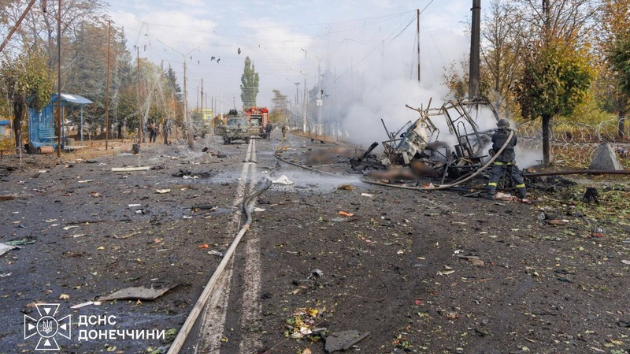

King Charles, Queen Camilla will make state visit to US in April

King Charles III and Queen Camilla bid farewell to President of Nigeria Bola Ahmed Tinubu and First Lady Oluremi Tinubu as they depart from Windsor Castle, March 19, 2026 in Windsor, England. (Aaron Chown/Wpa Pool/Getty Images)

(LONDON) -- King Charles and Queen Camilla will make an official state visit to the U.S. this spring, Buckingham Palace announced Tuesday.

The British royals are embarking on the trip to celebrate the 250th anniversary of America’s independence and were invited by President Donald Trump, according to the palace.

In a social media post, Trump said the royal visit will take place April 27-30. It will include a banquet dinner at the White House on Tuesday, April 28, he noted.

After visiting the U.S., Charles will also visit Bermuda, a British overseas territory, making his first visit to the island as monarch.

Queen Elizabeth II made the last state visit to the U.S. in May 2007 to commemorate the 400th anniversary of the Jamestown settlement in Virginia.

Charles and Camilla‘s visit comes during a tense period amid the ongoing U.K. police inquiry into the Jeffrey Epstein files and the Iran war.

It is unclear if Charles will visit with his second son, Prince Harry, who lives in California with his wife Meghan, the Duchess of Sussex and their two children.

Copyright © 2026, ABC Audio. All rights reserved.
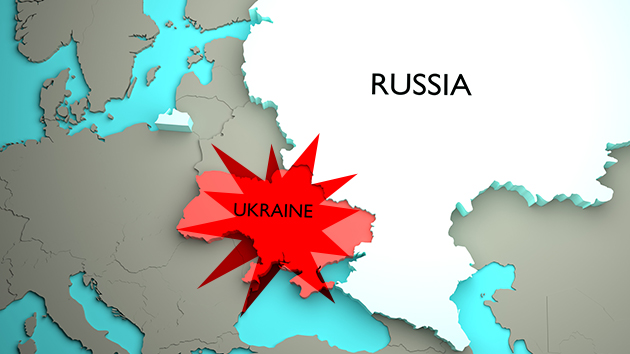

2 more detained in thwarted 'terrorist' attack at Bank of America building in Paris, officials say

Automobiles pass a former postal and telegraph building, where Bank of America Corp. is leasing space for 400 workers, in Paris, France, on Wednesday April 10, 2019. (Photographer: Christophe Morin/Bloomberg via Getty Images)

(NEW YORK) -- Two additional teenagers have been detained in what authorities in France are investigating as an attempted terrorist attack in which a third teenager allegedly tried to detonate an explosive device outside a Bank of America in Paris, according to a police source close to the investigation.

The incident occurred shortly before 3:30 a.m. local time on Saturday, according to police and the French Interior Ministry. Police were patrolling the street near where the Bank of America is located in the 8th arrondissement neighborhood, authorities said.

One suspect was arrested after he allegedly left two bottles of flammable liquid attached with adhesive tape and 650 grams of explosive powder, authorities said. The suspect was attempting to set fire to the device with a lighter, according to police.

Two suspects were detained on Sunday, a law enforcement source close to the investigation told ABC News. All three suspects, including one arrested at the scene on Saturday, are under the age of 18, according to the source.

The French Interior Ministry confirmed that two additional suspects were detained in the case.

One of the teenagers detained on Sunday is believed to have fled the scene of the thwarted alleged attack after being spotted across the street from the Bank of America building allegedly filming the incident, officials said.

French Interior Minister Laurent Nuñez congratulated French police for thwarting the "violent" attack in Paris overnight Saturday, where the suspect attempted to set off the explosive outside the Bank of America building in the central part of the city.

The "swift intervention" of police prevented the attack, which Nuñez described as a "violent action of a terrorist nature" in a post on X.

"Vigilance remains at a very high level," Nuñez wrote. "I commend all the security and intelligence forces fully mobilized under my authority in the current international context."

The National Anti-Terrorist Prosecutor's Office is leading in the investigation, Nuñez said.

Copyright © 2026, ABC Audio. All rights reserved.


Where things stand 1 month into the war with Iran

Smoke rises after an explosion in the industrial zone, caused by debris after interception of a drone by air defence, according to the Fujairah media office on March 05, 2026, in Fujairah, United Arab Emirates. (Photo by Christopher Pike/Getty Images)

(NEW YORK) -- On Feb. 28, the United States and Israel launched massive strikes on Iran in an operation targeting military and government sites that President Donald Trump has said could last as little as four weeks.

One month later, both countries remain engaged in a war that has impacted the wider Gulf region, killing thousands of people, as the Pentagon is preparing to surge thousands of troops to the Middle East, according to U.S. officials.

As the U.S. enters its fifth week of the conflict, here's a look at how we got here, where things stand and where they may go from here.

Negotiations break down 
Operation Epic Fury began months after the U.S. and Israel carried out strikes on nuclear weapons facilities in Iran, with Trump declaring at that time that the regime's nuclear capabilities had been "obliterated."'

In the weeks leading up to the Feb. 28 strikes, the U.S. tried to negotiate with the Iranian regime to reach a nuclear deal, with Trump saying he was weighing whether to strike. A day before launching Operation Epic Fury against Iran, Trump said he was "not happy" with the negotiations.

Ayatollah Ali Khamenei was among those killed in Tehran in the initial strikes, with his son Mojtaba Khamenei later chosen to succeed him. 

Trump said at the start of the "major combat operations," which occurred without Congressional approval, that they were to "defend the American people by eliminating imminent threats from the Iranian regime," and he called on the Iranian people to depose the regime.

In the weeks since, more than 1,440 civilians, including at least 217 children, have died from U.S. and Israeli strikes in Iran as of March 23, according to a report from several human rights groups. Iranian officials have blamed the U.S. for a missile strike on an Iranian elementary school that killed nearly 170 people. The Trump administration has said it is investigating the incident.

Regional allies attacked
Iran retaliated against the strikes with missile and drone attacks targeting Israel, regional U.S. bases and multiple Gulf nations, primarily targeting U.S. interests in the region.

Thirteen American servicemembers have been killed since the war began, including seven from retaliatory strikes in Kuwait and Saudi Arabia and six from an aircraft crash in Iraq. Over 300 troops have also been injured, a U.S. official said Friday.

Iran has also launched a series of retaliatory strikes against the energy infrastructure in several Gulf states after Israel hit its largest gas field -- in what one Qatari official called a "dangerous escalation."

Experts say the strikes and the threat of further attacks risk throwing global energy markets into a state of protracted chaos.

Amid the conflict, Israel has also intensified its long-running strike campaign against the Iran-backed Hezbollah militia in Lebanon and expanded its ground operations in the south of the country. More than 1,000 people have been killed and thousands more injured in Lebanon amid this escalation, according to Lebanese officials.

In response to the U.S.-Israeli strikes, Iran has effectively closed the Strait of Hormuz, a vital maritime passage for the oil and shipping trades, threatening an energy crisis.

Iran has attacked several oil tankers since the war began in late February, halting nearly all shipping traffic. The supply shock has sent the price of oil surging.

Trump has threatened to attack Iran's power plants if it doesn't fully reopen the strait, since extending the deadline to do so to April 6. 

US' expansive aims
Trump's stated goals in Iran have shifted and expanded in the weeks since the conflict began, from talks of regime change and peace throughout the Middle East to, more recently, reopening the Strait of Hormuz.

Among other key aims, the U.S. military has said Iran's navy and ballistic missile stocks and production capabilities have been degraded by airstrikes.

Making sure Iran does not obtain a nuclear weapon has been another major goal of Trump's. Iran's intent to build a nuclear weapon, according to Trump, was a central justification for the war.

Trump has suggested that Americans could go in to seize Iran's enriched uranium. Experts previously told ABC News that a large American force on the ground would likely be needed to take the nuclear material but would carry a lot of risk.

During a Cabinet meeting on Thursday, Vice President JD Vance emphasized the importance of preventing Iran from obtaining a nuclear weapon and warned that there are "further military options" possible.

Where things go from here
The White House has said "productive" negotiations have been ongoing between the U.S. and Iran, while officials in Tehran have publicly denied that any talks have taken place.

The U.S. has presented Iran with a 15-point framework for a peace deal via Pakistan, according to White House special envoy Steve Witkoff. As of Friday, the U.S. has not received a response from Iran, according to Secretary of State Marco Rubio. Sources previously told ABC News the plan addressed Iran's ballistic missile and nuclear programs as well as maritime routes.

The negotiations come as the U.S. is preparing to surge as many as 5,000 troops to the Middle East, according to two U.S. officials, and the Pentagon is seeking $200 billion in supplemental funding for the war. The funding request has been met with bipartisan skepticism from some lawmakers.

Rubio on Friday declined to answer questions from reporters on whether the U.S. planned to deploy ground troops in Iran. Though he said the U.S. can achieve its goals without putting boots on the ground.

Trump, who has said he believed the war could last up to four weeks, and at other times four to six weeks, said this week that the operation is "ahead of schedule" and should end soon. Rubio told reporters Friday that the operation could end in a "matter of weeks, not months."

The Israel Defense Forces said Friday they need "a few more weeks" to fully degrade Iranian military capabilities, such as missile-launchers, a senior Israeli security official told ABC News.

Copyright © 2026, ABC Audio. All rights reserved.



Upcoming Events

Programming